Blood pressure watches have become increasingly popular among people who want to keep an eye on their blood pressure without carrying a traditional monitor everywhere. These smart devices can be convenient, especially for people who want regular readings during the day. However, one important question often comes up: how to calibrate a blood pressure watch?
Calibration matters because a watch may produce readings that are different from those obtained with a clinically validated upper-arm blood pressure monitor. Some blood pressure watches use sensors and algorithms to estimate blood pressure, while others require comparison with a traditional cuff before they can provide readings. Understanding the calibration process can help users get more consistent results and avoid relying on inaccurate numbers.
What Does Calibration Mean on a Blood Pressure Watch?
Calibration is the process of comparing the watch’s readings with measurements from a trusted blood pressure monitor. Depending on the model, the watch may use this comparison to adjust its internal algorithm.
Not every device works in exactly the same way. Some blood pressure watches require calibration with a traditional cuff, while others may use different sensor technology or have specific setup procedures provided by the manufacturer.
The first step should always be checking the instruction manual or the manufacturer’s app. The required procedure can vary significantly between models.
Why Is Calibration Important?
Blood pressure is not a fixed number. It changes throughout the day depending on activity, stress, sleep, caffeine, posture and many other factors. A watch that has not been properly calibrated may provide readings that are not close enough to a reliable reference measurement.
For this reason, calibration is particularly important when using a smartwatch for blood pressure monitoring.
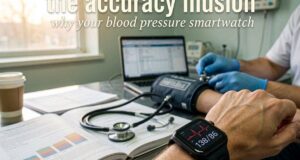
A traditional upper-arm cuff monitor is generally considered a better reference than a wrist-worn device. During calibration, the idea is to compare measurements taken under similar conditions so the watch can establish a more reliable relationship between its sensor readings and actual blood pressure measurements.
How to Calibrate a Blood Pressure Watch
Although the exact procedure differs from one manufacturer to another, the following process is common for devices that require calibration.
1. Read the Manufacturer’s Instructions
Before starting, find the official calibration instructions for your particular watch. Look in the user manual, smartphone application or manufacturer’s support section.
Do not assume that every blood pressure smartwatch can be calibrated in the same way. Some devices may require one measurement, while others may ask for several readings over a specific period.
2. Use a Reliable Upper-Arm Monitor
You will normally need a reliable blood pressure cuff for comparison. An upper-arm monitor is generally preferable to a finger or wrist device when you need a reference measurement.
Make sure the cuff is the correct size for your arm. An incorrectly sized cuff can produce inaccurate results and may affect the calibration process.
3. Rest Before Taking a Reading
Sit quietly for several minutes before measuring your blood pressure. Keep your back supported, place your feet flat on the floor and rest your arm comfortably at approximately heart level.
Avoid exercising, smoking or consuming caffeine immediately before taking a measurement because these factors can temporarily influence blood pressure.
4. Take the Reference Measurement
Follow the instructions supplied with your blood pressure monitor. Keep still and avoid talking while the cuff is measuring.
Record the systolic and diastolic values displayed by the monitor.
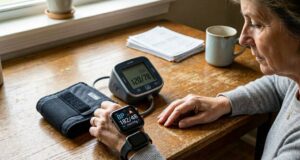
For example, if the reference monitor shows a reading of 122/78 mmHg, this is the measurement you may enter into the watch or its companion application if the device asks for calibration data.
5. Measure With the Watch
Wear the watch correctly and follow the manufacturer’s instructions for starting its blood pressure measurement or calibration mode.
The watch should sit in the position recommended by the manufacturer. Wearing it too loosely, moving your arm or positioning it incorrectly can affect sensor performance.
6. Repeat the Process if Required
Some blood pressure watches require multiple reference measurements rather than just one. If the manufacturer’s instructions call for several measurements, complete all of them.
Taking several measurements can help reduce the effect of a single unusual blood pressure reading.
7. Save the Calibration
Once the required measurements have been entered, the app or watch may calculate the necessary adjustment automatically.
Some devices may require calibration again after a certain period. Others may recommend recalibration when there are significant changes in blood pressure or when the device indicates that calibration is needed.
Common Blood Pressure Watch Calibration Problems
One of the most common problems is incorrect positioning. A watch that moves around on the wrist may not collect consistent sensor information.
Another problem is calibrating the watch while the user is stressed, physically active or has recently consumed caffeine. These conditions can change blood pressure and make the reference reading less representative.
Using a poor-quality reference monitor is another concern. If the cuff monitor itself gives unreliable measurements, the watch may effectively be calibrated against incorrect information.
Users should also avoid assuming that calibration makes a smartwatch equivalent to a medical blood pressure monitor. Calibration can improve consistency on supported devices, but it does not automatically turn every smartwatch into a clinically validated medical device.
How Often Should a Blood Pressure Watch Be Calibrated?
There is no single answer for every device. Calibration requirements depend on the manufacturer, technology and software.
Some devices may ask for periodic calibration, while others provide different instructions. The safest approach is to follow the manufacturer’s recommended schedule rather than recalibrating randomly.
It is also useful to compare your blood pressure watch readings with a trusted upper-arm monitor from time to time. If you repeatedly notice a large difference, check the device instructions and consider discussing the readings with a healthcare professional.
Tips for More Accurate Blood Pressure Watch Readings
Calibration is only one part of getting useful results. How you use the watch can also make a difference.
Keep the watch clean and wear it according to the manufacturer’s instructions. Avoid measuring immediately after exercise unless the purpose is specifically to observe post-exercise changes.
Try to measure under similar conditions when comparing readings. For example, taking a watch reading after sitting quietly and comparing it with a cuff measurement taken immediately afterward can provide a more meaningful comparison than comparing readings taken at completely different times.
It is also helpful to keep a record of your readings. Looking at measurements over several days can provide more useful information than focusing on one isolated result.
Can You Trust Blood Pressure Watches?
The answer depends on the particular device. Not all blood pressure watches use the same technology, and not all have the same level of validation.
A watch may be useful for tracking trends, but users should be cautious about treating a single smartwatch reading as a diagnosis. If a reading seems unusually high or low, it is sensible to repeat the measurement using a reliable upper-arm monitor.
People who have been advised to monitor their blood pressure should follow their healthcare professional’s recommendations regarding which type of monitor to use.
Learning how to calibrate a blood pressure watch is important if your device supports calibration. The basic idea is to compare the watch with a reliable upper-arm blood pressure monitor under controlled conditions and follow the manufacturer’s calibration instructions carefully.
Correct positioning, proper cuff size, adequate rest and repeated measurements can all contribute to better results. However, calibration does not guarantee that every smartwatch will provide medical-grade readings.
For anyone regularly monitoring blood pressure, a validated upper-arm monitor can remain an important reference. A blood pressure watch may be a convenient additional tool for tracking readings throughout the day, but unusual or concerning results should not be ignored or diagnosed solely from smartwatch data.