Blood pressure watches have become increasingly popular among people who want to keep track of their health without carrying a traditional blood pressure monitor everywhere. A watch on the wrist can be convenient, especially for people who want to check their readings regularly throughout the day.
However, one common concern is blood pressure watch accuracy problems. A smartwatch may show a reading that looks different from a traditional upper-arm monitor, or the results may change from one measurement to another. Understanding why this happens can help users get more meaningful readings and avoid relying on inaccurate information.
Why Do Blood Pressure Watches Have Accuracy Problems?
Blood pressure is affected by many factors, and measuring it from the wrist is not as straightforward as measuring steps or heart rate.
Most blood pressure watches use sensors and algorithms to estimate blood pressure. Depending on the device, these may include optical sensors and other technologies designed to detect changes associated with blood flow.
The watch then processes the collected information and produces an estimated blood pressure value.
Small differences in how the watch is worn, how much the user moves, or how the measurement is taken can affect the result. This is one reason why a smartwatch reading should not automatically be considered identical to a reading from a validated upper-arm cuff.
Incorrect Watch Position
One of the most common causes of inaccurate smartwatch readings is wearing the device incorrectly.
A watch that is too loose may not maintain consistent contact with the skin. On the other hand, wearing it excessively tight can also be uncomfortable and may interfere with normal use.
The position of the wrist during measurement matters as well. If the user’s arm is moving or the wrist is held in an unusual position, the sensors may have difficulty collecting consistent information.
Following the manufacturer’s instructions is therefore important when using blood pressure watches.
Movement During Measurement
Movement is another major factor.
If someone is walking, exercising, talking, or moving their arm while taking a reading, the watch may produce a result that is less reliable. Even small movements can interfere with sensor-based measurements.
For a better reading, users should sit quietly and remain still while the device performs its measurement. This is similar to the general principle used with traditional blood pressure monitoring.
Taking measurements under similar conditions can also make it easier to compare readings over time.
Calibration Problems
Some blood pressure watches require calibration with a traditional blood pressure cuff. If the calibration is performed incorrectly, the smartwatch may produce unreliable readings.
Calibration can also become less useful if the watch’s measurements change over time or if the user’s circumstances change significantly.
Not every watch requires calibration, but users should carefully follow the instructions provided for their specific device.
A product advertised as “calibration-free” should also not automatically be assumed to be more accurate. The important question is whether there is reliable evidence supporting the device’s blood pressure measurement technology.
Differences Between Smartwatch and Cuff Readings
People often become concerned when their smartwatch displays a different number from their traditional blood pressure monitor.
Some variation can occur because the devices use different measurement methods.
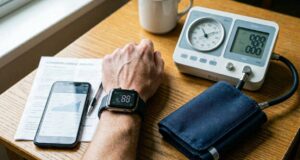
A conventional upper-arm monitor uses an inflatable cuff to measure blood pressure. Many wearable devices estimate blood pressure using sensors and algorithms.
Therefore, a smartwatch reading should not be expected to match a cuff reading perfectly every time.
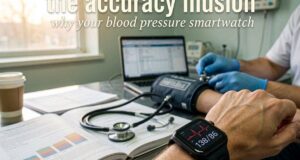
If there is a persistent or substantial difference between readings, it is worth discussing the issue with a healthcare professional and checking the smartwatch against an appropriate validated monitor.
Skin Contact Can Affect Accuracy
The sensors in blood pressure watches need appropriate contact with the skin.
Hair, sweat, loose straps, movement, or poor positioning can potentially affect the quality of the signals collected by optical sensors.
This is particularly relevant during exercise or outdoor activities when the skin may become sweaty.
Cleaning the sensor area and wearing the watch according to the manufacturer’s instructions can help maintain consistent contact.
Individual Differences Matter
Another reason for blood pressure watch accuracy problems is that people are different.
Skin characteristics, wrist size, circulation, age, and other individual factors can affect how sensors collect information.
A device that performs well for one person may not necessarily produce equally consistent results for another.
This is why independent validation and information about the intended user population are important when choosing among blood pressure watches.
High or Low Readings Should Be Checked
A smartwatch should not be the only source of information when a reading appears unusually high or low.
If a result seems very different from what you normally see, repeat the measurement under appropriate conditions. If possible, compare it with a suitable upper-arm blood pressure monitor.
One unusual reading does not necessarily mean that the watch is malfunctioning or that your blood pressure has suddenly changed.
Likewise, repeatedly ignoring unusual readings simply because they came from a smartwatch is not a good approach.
If you are concerned about your blood pressure, speak with a qualified healthcare professional.
How to Improve Blood Pressure Watch Accuracy
There are several practical steps that may help users obtain more consistent readings.
Wear the Watch Correctly
Follow the manufacturer’s instructions regarding placement and strap tightness. The sensor should have appropriate contact with the skin.
Stay Still
Sit quietly during the measurement and avoid talking or moving your arm.
Take Measurements Under Similar Conditions
Comparing readings taken at completely different times and circumstances can make trends difficult to understand. Try to follow a consistent routine when monitoring your blood pressure.
Keep the Sensors Clean
Dirt, sweat, or other substances on the sensor can affect its contact with the skin. Keep the watch and sensor area clean according to the manufacturer’s recommendations.
Check the Device Instructions
Every watch can work differently. Read the manufacturer’s instructions for measurement, calibration, positioning, and troubleshooting.
Compare With a Validated Monitor
If you are concerned about the accuracy of your smartwatch, comparing its readings with a validated upper-arm blood pressure monitor can provide useful information. A healthcare professional can also help determine whether the readings are reliable enough for your intended use.
Are Blood Pressure Watches Reliable?
The answer depends on the particular device.
It would be incorrect to say that all blood pressure watches are inaccurate. At the same time, it is equally misleading to assume that every smartwatch can provide medical-grade blood pressure measurements simply because the product has a blood pressure feature.
The technology is developing rapidly, and manufacturers use different approaches.
Before buying a device, look for information about how blood pressure is measured, whether the feature has been validated, and whether it has appropriate regulatory authorization for its intended use.
A watch with strong documentation is a more sensible choice than one based solely on attractive marketing claims.
Should You Trust a Blood Pressure Watch?
A smartwatch can be useful for tracking health information, but users should understand its limitations.
If you are using blood pressure watches for general wellness tracking, the readings may help you observe changes and patterns. However, if you have been diagnosed with high blood pressure or have been instructed to monitor your blood pressure for medical reasons, follow the monitoring method recommended by your healthcare professional.
Smartwatch technology should complement appropriate monitoring rather than replace professional medical advice.
Blood pressure watch accuracy problems can happen for many reasons, including incorrect positioning, movement, poor sensor contact, calibration issues, individual differences, and limitations in the technology itself.
The best way to get useful results is to use the watch correctly, follow its instructions, remain still during measurements, and pay attention to patterns instead of focusing on a single number.
When choosing blood pressure watches, accuracy claims should be examined carefully. Look for reliable validation information, understand the measurement technology, and consider using a validated upper-arm monitor when dependable blood pressure measurements are required.
A smartwatch can make health tracking much more convenient, but convenience should never come at the expense of reliable information.