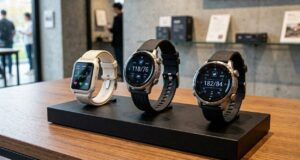
Keeping track of heart health at home has become easier with wearable technology. Modern smartwatches can monitor several health measurements, including heart rate, activity and, on some models, blood pressure-related information. Some devices also include features designed to detect possible irregular heart rhythms.
This combination has made blood pressure watches interesting for people who want a convenient way to keep an eye on their cardiovascular health. A watch with irregular heartbeat detection can potentially alert a user when its sensors notice an unusual heart rhythm. However, it is important to understand what these features can and cannot tell you before relying on them.
What Is Irregular Heartbeat Detection?
An irregular heartbeat means that the heart rhythm is not following its usual pattern. The heart may sometimes beat too quickly, too slowly or irregularly.
Smartwatches commonly use optical sensors to monitor changes in blood flow through the wrist. Some models also include electrical sensors that can record an electrocardiogram, commonly known as an ECG.
Depending on the device, the watch may analyze this information and notify the wearer when it detects a pattern that could indicate an irregular rhythm.
It is important to remember that a smartwatch alert is not automatically a diagnosis. The device is identifying a pattern that may require further evaluation.
How Do Blood Pressure Watches Detect Heart Activity?
Many blood pressure watches use sensors located on the underside of the watch.
Optical sensors shine light into the skin and measure changes in blood volume as the heart pumps. This information can be used to calculate heart rate and, depending on the device, estimate other cardiovascular measurements.
Some advanced watches include electrical sensors. When the user touches designated areas of the watch, the device can record electrical signals associated with the heartbeat.
The technology differs considerably between products, so consumers should check the specifications of a particular device rather than assuming every smartwatch offers the same capabilities.
Why Combine Blood Pressure and Heart Monitoring?
Blood pressure and heart rhythm are related to cardiovascular health, but they are not the same measurement.
Blood pressure describes the force of blood against artery walls. Heart rhythm describes the timing and pattern of heartbeats.
A person can have an abnormal heart rhythm without having high blood pressure, and someone can have high blood pressure without experiencing an irregular heartbeat.
For this reason, a wearable that provides both types of information can offer a broader picture of cardiovascular activity. Nevertheless, neither measurement should be interpreted in isolation.
Benefits of Irregular Heartbeat Alerts
One of the main advantages of smartwatch-based heartbeat detection is convenience.
A person does not have to visit a clinic every time they want to check their heart rate. The watch can monitor the wearer during normal daily activities and may provide an alert when an unusual pattern is detected.
This can be particularly useful when an irregular rhythm occurs intermittently. A person might not notice any symptoms when it happens, while a wearable device may identify a pattern worth discussing with a healthcare professional.
Some devices can also save health information in a companion smartphone application, making it easier to review previous readings.
Can a Watch Diagnose an Irregular Heartbeat?
No smartwatch should be treated as a substitute for professional diagnosis simply because it has an irregular heartbeat feature.
A watch may detect a pattern that resembles a particular rhythm problem, but proper diagnosis can require medical evaluation and testing.
An ECG performed by a suitable medical device can provide more detailed information than a basic optical heart-rate sensor. In some cases, a doctor may recommend additional monitoring to understand how frequently an irregular rhythm occurs.
Therefore, a smartwatch alert should generally be treated as information that may deserve attention rather than a final diagnosis.
What Should You Look for in Blood Pressure Watches?
When shopping for blood pressure watches, it is easy to focus on the number of features. However, the quality and purpose of those features matter more than the feature count.
Look for clear information about:
- Blood pressure measurement method
- Heart-rate monitoring
- Irregular rhythm detection
- ECG availability, if applicable
- Calibration requirements
- Clinical validation
- Battery life
- Smartphone compatibility
- Health data storage
- Manufacturer support
It is also worth checking whether the blood pressure function is actually intended for medical monitoring or simply provides wellness estimates.
Accuracy Matters
Accuracy is one of the most important considerations when choosing wearable health technology.
Not every smartwatch measures blood pressure directly. Some devices estimate it using sensors and algorithms, and certain models require calibration with a traditional blood pressure cuff.
Similarly, heart rhythm detection can vary depending on the sensor technology and software used by the device.
For people who need dependable blood pressure monitoring, a validated upper-arm blood pressure monitor can remain an important reference.
If a smartwatch repeatedly gives results that seem unusual or significantly different from a trusted monitor, the readings should be checked rather than automatically accepted.
How to Use an Irregular Heartbeat Feature Properly
Start by reading the manufacturer’s instructions. Some watches need to be worn continuously for automatic monitoring, while others require the user to perform a specific measurement.
Keep the watch fitted properly and make sure the sensors remain in contact with the skin.
Movement can interfere with sensor readings, so it is often helpful to remain still when performing a dedicated heart measurement.
If the watch provides an ECG feature, follow the instructions carefully. The recording may require the user to place a finger on a particular sensor for a specified period.
Keep in mind that the quality of the recording can affect the usefulness of the result.
What If the Watch Gives an Alert?
An irregular heartbeat notification does not necessarily mean that something serious is happening.
Wearables can sometimes produce false alerts because of movement, poor sensor contact or other factors. If an alert appears, follow the manufacturer’s guidance and consider repeating the measurement if appropriate.
If irregular readings continue, or if the person experiences concerning symptoms, medical advice should be sought.
A smartwatch should never be used to dismiss symptoms simply because it does not provide an alert.
Blood Pressure and Heart Health Tracking at Home
For people monitoring cardiovascular health at home, it can be useful to keep a record of blood pressure and other relevant measurements.
A blood pressure watch may make it easier to notice patterns in daily readings. However, consistency is important. Measurements should be taken according to the device’s instructions and, when using a traditional cuff, under similar conditions whenever possible.
Instead of focusing on one isolated number, look at the overall pattern across multiple readings.
Sharing a useful record with a healthcare professional can also make appointments more productive.
Important Limitations of Smartwatch Monitoring
Wearable technology is improving rapidly, but there are still limitations.
A smartwatch is worn on the wrist and relies on sensors that can be affected by movement, skin contact and positioning. Blood pressure estimates may also depend on calibration and software algorithms.
Another limitation is that not every irregular heartbeat can be detected by every device. Some watches monitor only at particular times, while others offer more continuous tracking.
This means a normal smartwatch result does not necessarily prove that a person has no heart rhythm problem.
A blood pressure watch with irregular heartbeat detection can be a useful addition to a personal health-monitoring routine. Having blood pressure-related information, heart-rate tracking and possible irregular rhythm alerts in one wearable device can make everyday monitoring more convenient.
However, these watches should be viewed as monitoring tools rather than complete medical diagnostic systems. The quality of blood pressure measurement and irregular rhythm detection varies between devices, so buyers should carefully research the technology behind a watch before purchasing it.
For people who need reliable blood pressure measurements, a validated upper-arm monitor remains an important reference. If a smartwatch repeatedly reports unusual results or a person develops concerning symptoms, professional medical evaluation is more appropriate than relying on the watch alone.
Used sensibly, blood pressure watches can provide useful health information while helping users become more aware of changes in their cardiovascular measurements