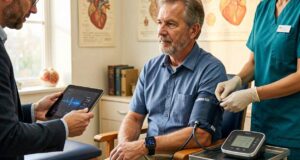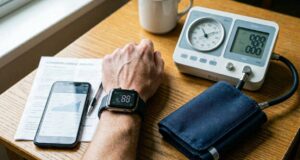
As people get older, keeping track of blood pressure can become an important part of everyday health management. Traditional blood pressure monitors are useful, but some older adults find them uncomfortable or inconvenient to use several times a day. This is one reason blood pressure watches have attracted attention. A watch can be worn throughout the day and may offer a convenient way to keep track of blood pressure and other health information.
However, choosing a blood pressure watch for an elderly person is not simply about buying the device with the most features. Ease of use, display size, comfort, measurement method, battery life and reliability all matter. A complicated smartwatch may have impressive specifications but still be frustrating for someone who wants a simple way to monitor their health.
Why Blood Pressure Monitoring Matters for Older Adults
Blood pressure can change with age, and many older adults are advised by their healthcare providers to monitor it regularly. High blood pressure often does not cause obvious symptoms, which is why regular measurements can be useful.
For an elderly person, having an easy monitoring routine can make a significant difference. Instead of taking out a separate device every time, a smartwatch can potentially make health tracking more convenient.
Still, convenience should not come at the expense of accuracy. A wearable device should be viewed as a monitoring aid rather than an automatic replacement for a clinically validated blood pressure monitor.
What Should Elderly People Look for in Blood Pressure Watches?
There are several features worth considering before purchasing a blood pressure watch.
Large and Easy-to-Read Display
A clear display is particularly helpful for older users. Small text, crowded menus and complicated icons can make a smartwatch difficult to operate.
Look for a watch with a reasonably large screen and readable numbers. High contrast and simple menus can also make everyday use easier.
The blood pressure result should be easy to find without going through several complicated screens.
Simple Controls
The best blood pressure watches for elderly users are not necessarily the ones with the greatest number of functions. A straightforward interface can be much more useful.
Large buttons, simple menus and an easy-to-understand companion app can reduce frustration. If the user needs help from a family member to operate the watch every time, some of the convenience of the device is lost.
Comfortable Design
An elderly person may wear the watch for many hours each day, so comfort is important.
A lightweight design and an adjustable strap can make a difference. The watch should fit securely without being excessively tight.
A loose fit can interfere with sensor readings, while an overly tight strap may become uncomfortable during extended use.
Accuracy Is One of the Most Important Considerations
When looking at blood pressure watches, accuracy should be near the top of the list.
Not every smartwatch measures blood pressure in the same way. Some devices estimate blood pressure using optical sensors and algorithms, while others may require calibration with a traditional cuff.
This means shoppers should not assume that every watch advertised as a blood pressure monitor provides medical-grade measurements.
Before buying one, check whether the particular model has been properly validated for blood pressure measurement. If accurate blood pressure monitoring is important for medical reasons, an approved upper-arm blood pressure monitor may still be the preferred reference.
Blood Pressure Watch vs. Traditional Monitor
A traditional upper-arm monitor has one major advantage: it is specifically designed for blood pressure measurement.
A smartwatch, on the other hand, offers convenience. It can potentially track additional information such as heart rate, activity and sleep alongside blood pressure-related data.
For many elderly users, the two devices can complement each other. A blood pressure watch can be useful for convenient tracking, while an upper-arm cuff can be used when a more dependable blood pressure measurement is needed.
If the readings from the two devices differ significantly, it is better to investigate the difference rather than automatically assuming the watch is correct.
Calibration Can Be Important
Some blood pressure watches require calibration using a traditional blood pressure cuff. During calibration, readings from the watch are compared with measurements from a reference device.
If an elderly person is using a watch that requires calibration, it is important to follow the manufacturer’s instructions carefully.
The person should normally rest before taking measurements, remain still during the reading and use the correct cuff size for the reference monitor.
Calibration requirements vary between manufacturers, so users should not apply the procedure from one smartwatch to another without checking the specific instructions.
Battery Life and Charging
Battery life is another practical consideration for older users.
A watch that needs to be charged every day may be inconvenient, particularly if the user forgets to put it back on after charging. Longer battery life can make health tracking more consistent.
The charging system should also be simple. A magnetic charger or an easy-to-connect charging dock may be preferable to a complicated setup.
Family members can also help establish a regular charging routine if necessary.
Emergency and Health Features
Some smartwatches offer additional safety features that may be useful for elderly users. Depending on the model, these can include fall detection, emergency calling, heart-rate alerts and activity monitoring.
These features can be valuable, particularly for older adults who live alone.
However, buyers should check exactly how each safety feature works. Some functions may require a connected smartphone, an internet connection or a subscription.
It is better to understand these requirements before purchasing rather than discovering them after an emergency occurs.
Is a Blood Pressure Watch Suitable for Every Elderly Person?
Not necessarily.
An elderly person who is comfortable with technology may find a smartwatch extremely useful. Someone who prefers simple equipment may be happier with a traditional blood pressure monitor.
Vision, dexterity and familiarity with smartphones should also be considered. A person who has difficulty tapping small buttons may struggle with a complicated touchscreen.
The goal should be finding a device that the person will actually use consistently.
Tips for Getting Better Readings
Even the best blood pressure watches can produce inconsistent results if they are not used properly.
Wear the watch exactly as recommended by the manufacturer. Avoid moving during measurements and take readings under similar conditions when tracking changes over time.
It is also useful to keep a record of readings. Looking at several measurements over a period of time can provide a better picture than concentrating on one number.
If a reading appears unusually high or low, repeat the measurement using a reliable upper-arm monitor when possible.
Older adults should also discuss their blood pressure monitoring routine with their healthcare provider, particularly if they are already taking medication for blood pressure.
What About Blood Pressure Alerts?
Some wearable devices can provide notifications when measurements appear outside a particular range. These alerts may be convenient, but they should not be treated as a diagnosis.
A single unusual reading does not necessarily mean that something is seriously wrong. At the same time, repeated abnormal readings should not simply be ignored because the watch may be inaccurate.
When there is a significant concern, confirmation with an appropriate blood pressure monitor and professional medical advice is more appropriate than relying entirely on a smartwatch.
Choosing the Right Blood Pressure Watch for an Elderly Person
Before purchasing, make a short checklist of the features that matter most.
Consider:
- Easy-to-read screen
- Simple controls
- Comfortable strap
- Reliable battery life
- Clear blood pressure information
- Appropriate calibration process
- Good-quality companion app
- Compatibility with the user’s smartphone
- Health and emergency features when needed
- Evidence supporting the device’s blood pressure measurements
Price should not be the only deciding factor. A cheaper device that produces confusing information may be less useful than a simple, well-designed model.
Blood pressure watches can offer elderly people a convenient way to keep track of health information, especially when the device is comfortable and easy to operate. Features such as a large display, simple controls, long battery life and reliable health tracking can make a smartwatch more suitable for older adults.
However, accuracy deserves particular attention. A watch should not automatically be considered a replacement for a validated upper-arm blood pressure monitor simply because it displays blood pressure numbers.
For elderly users, the best approach is to choose a device that fits their abilities and monitoring needs. When used correctly and alongside an appropriate reference monitor, a blood pressure watch can become a useful part of a regular health-tracking routine.