The promise of modern consumer health technology is continuous, frictionless visibility into our vital signs. We have seamlessly adapted to tracking steps, monitoring sleep architecture, and measuring blood oxygenation from consumer wearables. Now, the tech sector is aggressively deploying cuffless wrist-based blood pressure (BP) tracking as the next essential health metric.
For individuals navigating hypertension, the prospect of ditching a restrictive, noisy arm cuff for a sleek smartwatch is incredibly appealing. However, the foundational question remains: How accurate are blood pressure watches really?
Recent clinical insights and international medical statements reveal a substantial gap between consumer expectations and physiological reality. While these devices excel at recognizing long-term lifestyle patterns, their single-reading accuracy is heavily disrupted by complex engineering bottlenecks, physiological variations, and algorithmic limits.
The Underlying Science: Estimation vs. Measurement
To evaluate the accuracy of a blood pressure watch, you must recognize that your smartwatch cannot actually measure pressure.
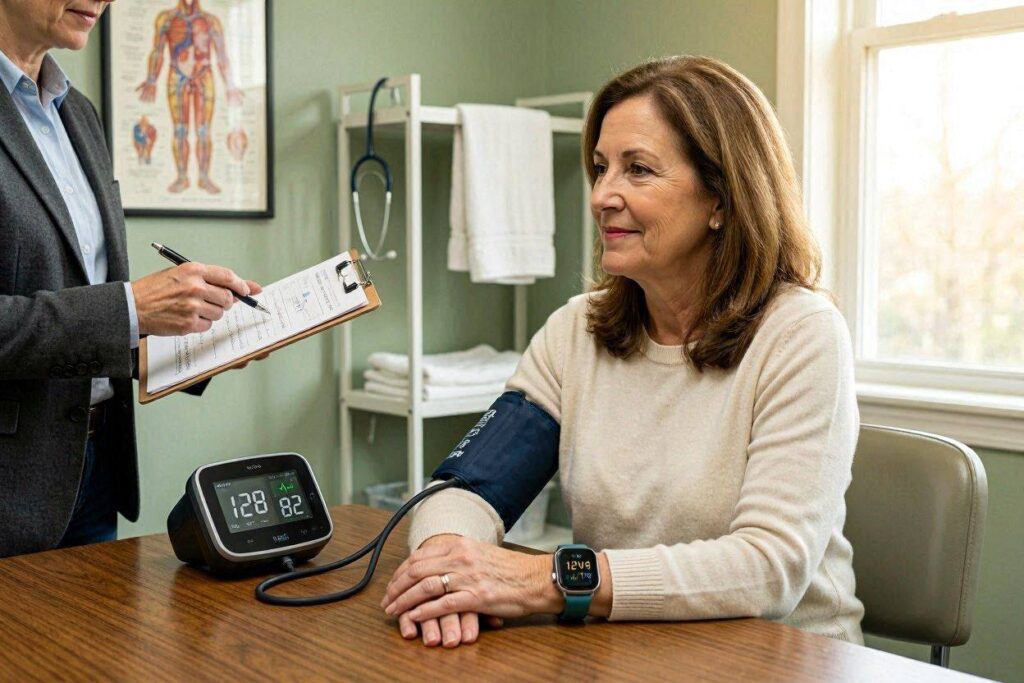
A traditional automated cuff utilizes the oscillometric method. It inflates to physically collapse the brachial artery in your upper arm and measures the exact mechanical force of blood pushing against that restriction as the cuff deflates. A smartwatch lacks an inflatable bladder and must rely on indirect proxy estimation through optical sensors.
Most commercial blood pressure watches utilize Photoplethysmography (PPG). The flashing optical sensors on the back of the device emit light into the skin to measure changes in blood volume within the microvasculature (the tiny capillaries and small radial vessels of the wrist) with every heartbeat.
[Optical Sensor Flashes Light] ──> [Detects Pulse Volume Wave] ──> [AI Algorithm Approximates Pressure]
Advanced models combine this with an Electrocardiogram (ECG) sensor to calculate Pulse Transit Time (PTT)—the precise duration it takes for a pressure wave to travel from the heart to the wrist. A proprietary mathematical model then interprets the speed and contour of this wave to display a systolic and diastolic number. The watch is not measuring pressure; it is observing light reflections and using software to guess the corresponding force in your main arteries.
Real-World Inaccuracies: The Core Biological Barriers
The human wrist is an unstable environment for gathering clinical-grade blood pressure data. This anatomical reality introduces several distinct errors:
Hydrostatic Disconnect
Blood pressure fluctuates radically depending on the vertical positioning of your limb relative to your heart. Traditional upper-arm cuffs sit naturally at heart level. A smartwatch moves constantly. If a device triggers a passive background reading while your arm is hanging straight down, gravity pulls blood into the lower extremity, falsely inflating the resulting numbers.
Peripheral Amplification
Blood pressure is not uniform across the skeletal frame. As a pulse wave travels away from the heart into smaller, peripheral branching vessels like the radial artery in the wrist, the shape and amplitude of the wave change. This variance is highly sensitive to external temperatures, emotional stress, and personal arterial elasticity, making wrist signals an inherently unstable representation of central blood pressure.
Motion Artifact Distortion
Daily activities like typing, lifting, or walking generate micro-movements that alter the sensor’s physical contact with your skin. These movements create severe signal noise known as motion artifacts. When software filters this noise to keep the display readable, it frequently deletes parts of the true pulse wave, forcing the mathematical algorithm to approximate the missing variables.
Emerging Challenges in Wearable BP Integration
As the wearable industry pushes into deeper health integrations, medical researchers and software engineers are identifying complex, deep-seated technical hurdles.
1. The Trap of Calibration Drift
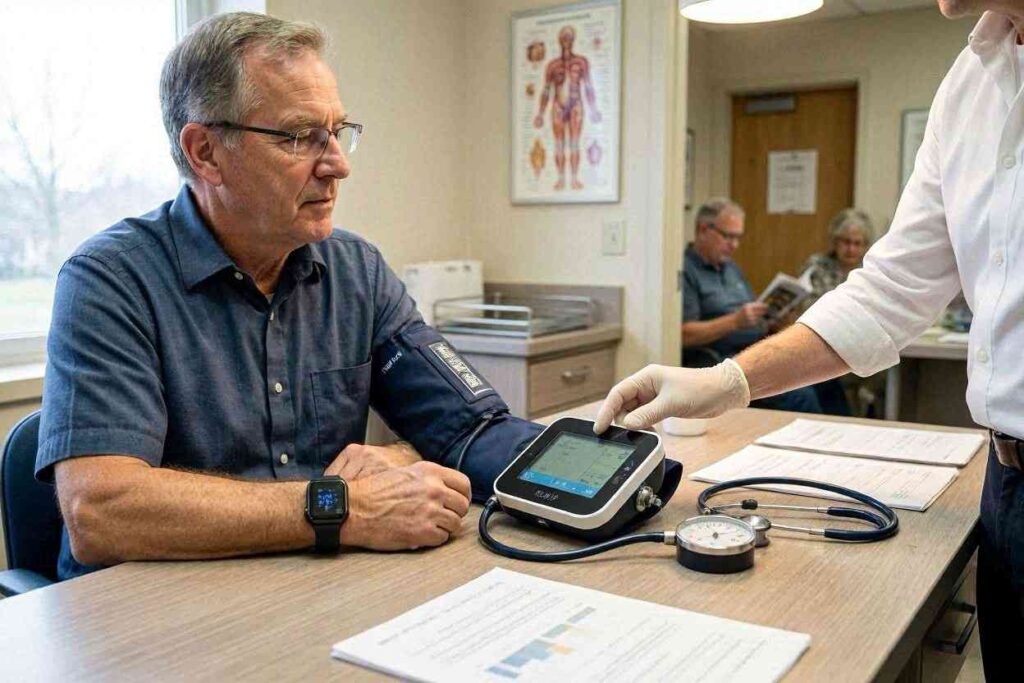
The vast majority of reputable blood pressure smartwatches do not function without a baseline anchor. They require the user to calibrate the watch manually using an upper-arm cuff at regular intervals (typically every 4 weeks). The algorithm ties its light-absorption equations to this fixed cuff value.
However, human blood vessels change dynamically based on hydration, caffeine, medication changes, and vascular aging. Over a short period, the watch encounters calibration drift. When this occurs, the device remains biased toward the old baseline data, frequently outputting normal numbers even if the user is experiencing an acute, dangerous hypertensive spike.
2. The Equity Gap in Optical Sensing (Melanin Attenuation)
A major challenge facing optical sensor accuracy is skin pigmentation. Melanin naturally absorbs green light—the specific wavelength used by standard consumer PPG sensors to map blood volume.
Higher Skin Melanin ──> Increased Light Absorption ──> Weaker Optical Signal Return ──> Elevated Risk of Algorithmic Error
Because the signal returning from darker skin tones can be weaker and more masked by background noise, standard machine learning models that lack diverse training datasets face a higher statistical error rate when tracking pulse wave contours in diverse populations.
3. False Alarm Rates and Clinical Overhead
Clinical evaluation data of modern cuffless watch features reveal complex performance disparities. For instance, validation trials show that while automated notifications can effectively flag potential risks in high-prevalence demographics, they can also leave a substantial percentage of undiagnosed hypertensive states undetected, or yield false positives in lower-risk groups. This creates a dual challenge: providing false reassurance to some users while inducing health anxiety and unnecessary clinical visits for others.
Market Landscape: Consumer Wellness vs. Medical Validation
To navigate this market safely, consumers must distinguish between general tracking features and verified diagnostic tools.
| Device Category | Core Technology | Primary Function | Clinical Status |
| Consumer Smartwatches | Pure Optical PPG / Pulse Contour Analysis | Tracking broad cardiovascular trends and lifestyle shifts. | Generally unapproved for diagnostic adjustments or medication management. |
| Specialized Wrist Monitors | Miniaturized Inflatable Bands / Advanced Bioimpedance | Intermittent active monitoring under specific posture constraints. | Medically validated (FDA Cleared / CE Marked) for home tracking. |
The overwhelming consensus among international cardiovascular societies remains clear: standard consumer smartwatches are not replacements for diagnostic upper-arm cuffs. Their primary medical value lies in tracking broad relative trends over weeks, rather than delivering precise, standalone absolute numbers.
Future Innovations
The race to overcome these physical and digital limitations is driving significant innovation in sensor development.
To bypass the limitations of green light absorption, engineers are shifting toward multi-wavelength arrays that integrate infrared light to penetrate deeper into tissue layers. Concurrently, academic and industry researchers are testing physics-informed machine learning models paired with bioimpedance sensors. By passing microscopic, imperceptible electrical currents through the wrist, these prototype devices map the literal electrical properties and fluid dynamics of pulsating blood, moving away from “black-box” optical calculations toward explicit physical modeling.
Until these advanced multi-sensor arrays become standard consumer electronics, smartwatches should be used as a supplementary warning system. If your watch flags a steady upward change in your blood pressure over several days, do not panic and do not alter your medication. Instead, sit quietly and verify those metrics using a validated, traditional upper-arm cuff before consulting your healthcare provider.