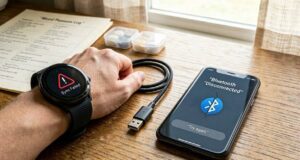
The wearable tech market has undergone a massive transformation. We have transitioned from basic step-trackers to sophisticated wrist-worn laboratories capable of monitoring heart rates, blood oxygen levels, and sleep cycles. Today, the latest frontier in health wearables is cuffless blood pressure (BP) monitoring.
For millions managing hypertension, the promise of tracking blood pressure via a sleek smartwatch—without the hassle of a squeezing arm cuff—sounds revolutionary. However, behind the glossy marketing campaigns lies a complex web of technological limitations, regulatory hurdles, and medical skepticism.
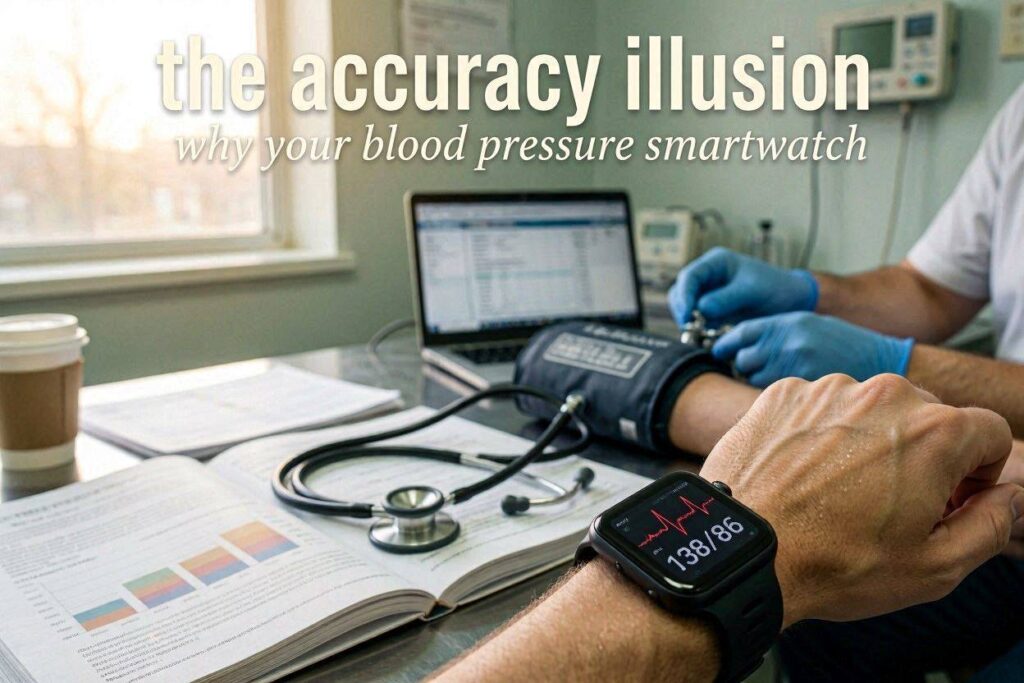
If you are relying on a smartwatch to track your cardiovascular health, you need to understand the stark reality of the “blood pressure watch accuracy gap” and the emerging challenges that developers and patients face in 2026.
How Smartwatches Estimate Blood Pressure (And Why It Fails)
To understand why a blood pressure watch is often inaccurate, we must first understand how it works. Unlike traditional medical equipment, a standard smartwatch cannot actually measure pressure. Instead, it estimates it using two primary methods:
1. Photoplethysmography (PPG) and Pulse Wave Analysis (PWA)
Most smartwatches use optical sensors (the flashing green or red lights on the back of the watch) to emit light into your skin and measure how much light is reflected back. This measures changes in blood volume with each heartbeat, creating a pulse waveform. Advanced algorithms then analyze the shape and speed of this wave to guess your blood pressure.
2. Pulse Transit Time (PTT)
Some high-end wearables require you to touch a metal button to complete an electrical circuit (ECG) while simultaneously using the optical PPG sensor. The watch measures the time it takes for a pulse of blood to travel from your heart (ECG) to your wrist (PPG). Generally, faster transit times imply stiffer, higher-pressure arteries.
The Flaw: Both PPG and PTT are indirect proxies for blood pressure. They do not measure the force of blood against arterial walls; they measure optical changes at the surface of the skin and use mathematical assumptions to calculate a number.
The Core Challenges Behind Wrist-Based BP Inaccuracy
The human wrist is arguably one of the worst places on the body to measure blood pressure accurately. This inherent biological reality creates several persistent technical challenges:
1. Hydrostatic Pressure Errors
Blood pressure changes based on the position of your arm relative to your heart. Traditional upper-arm cuffs naturally sit at heart level. A watch, however, moves constantly. If your arm is resting by your side or raised above your head during a background reading, the hydrostatic pressure changes significantly, leading to wildly inaccurate data.
2. The Calibration Trap
Most current BP watches require initial and ongoing calibration using a traditional upper-arm cuff. The watch essentially anchors its algorithm to your cuff reading.
- If your initial cuff reading was flawed, every watch reading that follows will be wrong.
- If your blood pressure experiences a sudden, acute spike due to stress or medical emergency, the watch’s algorithm often fails to track the extreme deviation because it is fundamentally biased toward your baseline calibrated numbers.
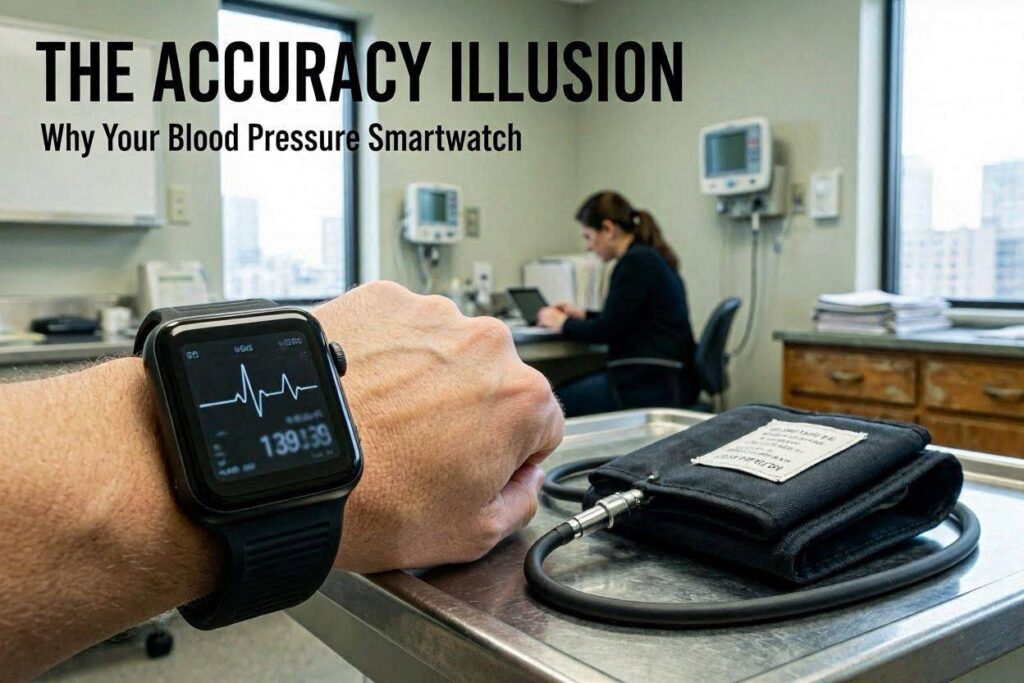
3. Motion Artifacts and Skin Physiology
Smartwatch sensors require a stable, flush connection with the skin. Simple movements like typing, walking, or adjusting your grip can shift the sensor, introducing “noise” into the data. Furthermore, variations in skin tone, wrist hair, tattoos, and peripheral perfusion (how much blood flows to your skin in cold weather) can severely degrade the optical signal quality.
The Emerging 2026 Issues: Personalization and Algorithmic Bias
As the technology attempts to mature, researchers and medical professionals are flagging new, deep-seated issues that go beyond simple sensor movement.
Algorithmic Homogeneity (The “Average Person” Bias)
The software powering these watches relies heavily on machine learning models trained on specific datasets. If a company trains its algorithm primarily on healthy, young individuals, the watch will perform poorly when worn by an elderly patient with arterial stiffness or someone suffering from arrhythmias like Atrial Fibrillation (AFib). The algorithm tries to force a unique physiological pulse wave into a standardized statistical box.
The Problem with True “Cuffless” Innovation
In recent years, manufacturers have pushed for calibration-free cuffless monitoring to eliminate the need for a traditional arm cuff entirely. While highly convenient, this removes the only reliable baseline the watch has. Without a physiological anchor, these devices heavily rely on demographic guessing (age, weight, gender) combined with basic pulse metrics, turning a medical measurement into an educated statistical guess.
The Medical and Psychological Risks of Faulty Data
The gap between user expectation and device reality is not just a technical issue; it has real-world health consequences.
- False Reassurance (The Danger of Underestimation): If a watch consistently underreports blood pressure, a patient with asymptomatic hypertension (the “silent killer”) may delay seeking necessary medical intervention, falsely believing their lifestyle or medication is working perfectly.
- Unnecessary Anxiety (The Danger of Overestimation): Conversely, frequent inaccurate readings showing hypertensive spikes can cause severe health anxiety. This anxiety, ironically, triggers a genuine release of cortisol and adrenaline, causing an actual spike in blood pressure.
- Data Overwhelm for Physicians: Doctors are increasingly facing patients arriving at clinics with reams of unverified, fluctuating smartwatch data. Because these consumer devices are not rigorously validated, clinicians cannot safely use this data to adjust medication dosages.
Current Regulatory and Market Landscape
It is crucial to differentiate between two categories of devices available in the market today:
| Device Category | Mechanism | Accuracy Level | Regulatory Status |
|---|---|---|---|
| Inflatable Wrist Cuffs (e.g., Omron HeartGuide) | Miniature physical bladder that inflates on the wrist. | Moderately High (if held strictly at heart level). | FDA Cleared / Medically Validated. |
| Pure Optical Smartwatches (Many mainstream brands) | Optical sensors (PPG) tracking blood flow velocity. | Variable / Trend-based only. | Often lack clearance for absolute values; used for “tracking trends.” |
Most mainstream smartwatches that offer blood pressure monitoring include heavy disclaimers stating the feature is “for general wellness purposes only” and not intended to replace traditional diagnostic methods. This legal safety net highlights the industry’s own lack of confidence in absolute wrist-based accuracy.
The Path Forward: Can the Accuracy Gap Be Closed?
For wrist-worn blood pressure monitors to earn the trust of the global medical community, the industry must pivot toward stricter validation protocols.
- Adherence to Universal Standards: Devices must undergo independent testing matching the ISO 81060-2 standards, which dictate acceptable error margins for non-invasive blood pressure software.
- Multi-Sensor Integration: Future wearables cannot rely on light alone. Combining optical PPG with advanced bioimpedance sensors (measuring tissue resistance) and ultrasound technology may provide a more comprehensive picture of arterial behavior.
- Context-Aware Software: Smartwatches need to become smart enough to reject readings taken while the user is moving, speaking, or holding their arm in an incorrect position.
How to Use Your Smartwatch Wisely Today
If you own a smartwatch with blood pressure capabilities, it should not be discarded, but it must be used with a heavy dose of realism.
Do not view your smartwatch as an absolute digital doctor. Instead, treat it as a trend tracker. If your watch indicates a steady upward trend in your vitals over two weeks, do not panic—simply validate that trend by taking a reading with a certified, medically approved upper-arm cuff. In the realm of cardiovascular health, convenience should never replace clinical precision.